AI Devs Now: What Tools Are Trending Right Now (November 2026)
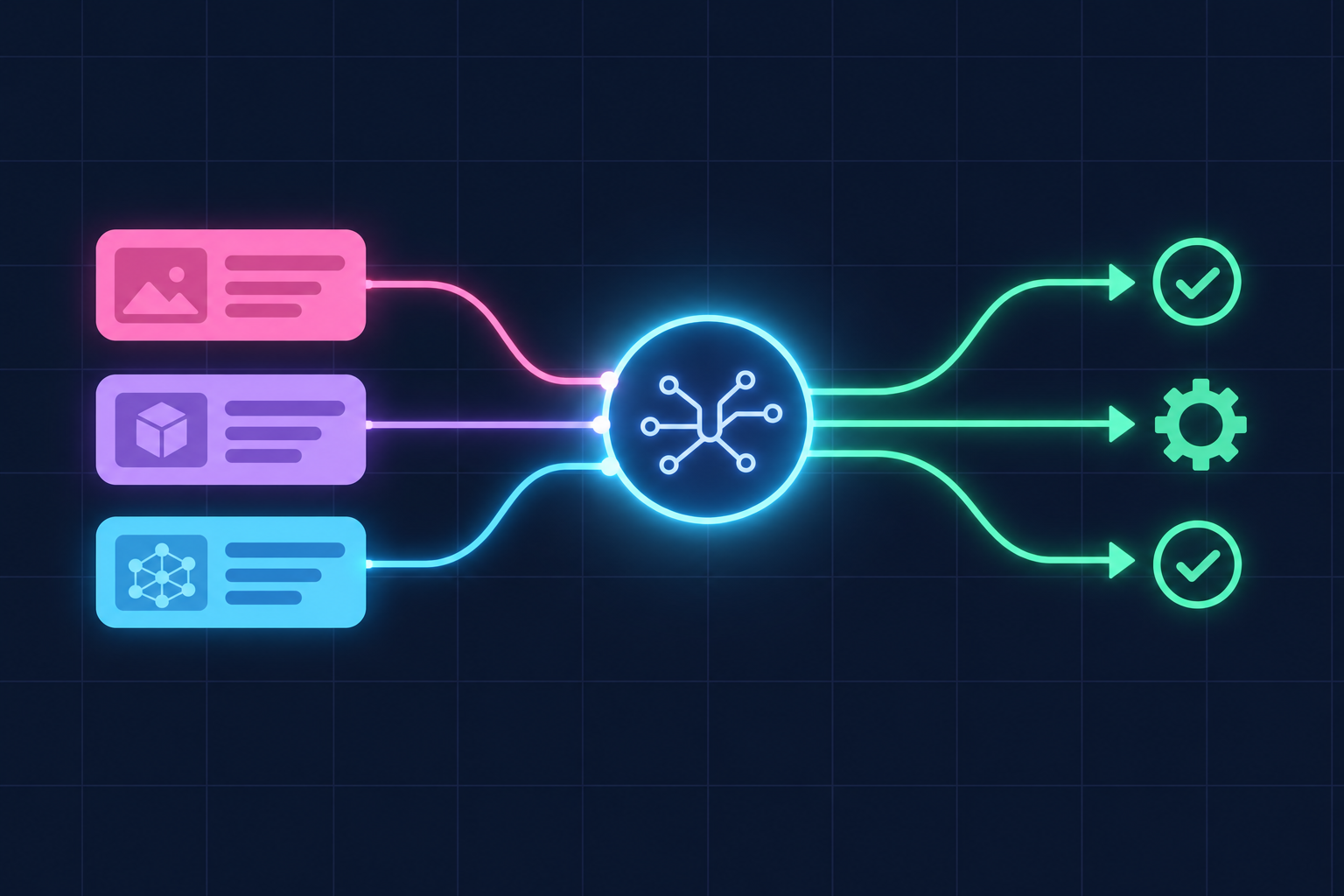
September was about the bill. November was about who pays it, and who decides.
Two things converged this month. The model tier filled in — GPT-6.2, MAI Code 2, and the rest of the Gemini 4 family all shipped within days of each other — and the harness layer absorbed the decision you used to make: every major tool now routes between models on its own. The model picker is quietly becoming an effort picker, and the security story arrived through the supply chain instead of a clever agent.
Here is what I'd actually take from the month.
The model layer: a flat launch and two workhorses with lanes
GPT-6.2 Astra and Sol shipped on November 17, and the interesting part is the split between the launch pitch and the reception. On paper it's a strong release: Astra lands at $8 input / $40 output per million tokens (20% under GPT-6 Astra's list) with cached input down to $0.40, and it took second place on the Artificial Analysis Intelligence Index, behind only Claude Fable 5.2. On science and 3D work it's clearly better — a new high on Terminal-Bench-Science and the top of AA-3D.
On coding, it landed flat. Astra scored unchanged from GPT-6 Astra on the Coding Agent Index, and Sol came in three points below 6.1 Sol in Codex at max effort. Early testers were unusually blunt — Matt Shumer said he wouldn't recommend either model after his runs, and Ethan Mollick found Astra harder to steer even while it finished an ambitious Blender and Unity project. The takeaway isn't that 6.2 is bad; it's that frontier launches are now graded per workload, and "harder to steer" is a release-day defect that benchmarks don't price in.
The pricing is still the most instructive part. Cached input dropped 60% while list prices dropped 20%. That is the same move Anthropic made with Fable 5.1 in September — vendors keep discounting the exact token that dominates an agent loop, the context you resend on every step.
MAI Code 2 and Code 2 Flash are the counterweight, shipped the same day at Microsoft Ignite. The claim is aggressive: averaged across DeepSWE 1.1, Terminal Bench 2.1, SWE-Atlas and FrontierCode v1.1, Code 2 delivers 98% of GPT-6.1 Sol's performance at 40% of the cost, and 96% of Claude Opus 5.5 at 5% of the cost. In blind frontend evals developers preferred its output over GPT-6 Sol 64% of the time. What I like most is the honesty of the scope: Microsoft explicitly says it is not tuned for fundamental science or very long-horizon agentic work. A workhorse that declares its lane is easier to route than a frontier model that pretends to do everything.
Gemini filled out the middle. Gemini 4 Neon arrived on the 18th at $3 / $15 with a one-million-token window, sitting between Carbon's deep work and Hydrogen's fast execution. Artificial Analysis measured Neon in Antigravity CLI at $6.86 per task, comparable coding-agent performance to Claude Code running Fable 5.2 or Opus 5.5 at $15.47 and $12.61 respectively.
Field note. Two months ago the question was "which model is cheap enough to loop." This month the tools stopped asking me — Fusion, Orchestrator and the CLIs now pick the model per step. The question I actually control anymore is how much effort to allow, and where I verify the router's choices.
Orchestration became the product
September's advice was to route, don't standardize. November is what that looks like when the vendors do it for you.
Copilot Fusion went GA on October 28 and it is the clearest version of the pattern. You stop selecting a model; you select Fusion and an effort level — Standard, High or Max — and it orchestrates models per task through three workflows: Single, Cascade (a cheap model drafts, a quality check escalates to a stronger one if needed), and Critique. Fusion Max scored 60 on the Artificial Analysis Coding Agent Index, within two points of Claude Code with Opus 5.5 Max, at about half the cost per task, half the tokens, and 40% less time. GitHub Enterprise customers now get Copilot included, metered against an enterprise budget — agent spend is a line item with a hierarchy now, not a personal subscription.
Google shipped the same idea inside the IDE three weeks later. Antigravity's Orchestrator pairs a planner (Gemini 4 Carbon or Argon) with Hydrogen, a lighter execution model, and transfers control between them mid-response: the planner explores and writes the implementation plan, Hydrogen edits and runs builds, and hands back if tests keep failing. That is different from routing — routing picks once per prompt, orchestration hands off inside one task.
| Where the decision lives | Tool | What you pick |
|---|---|---|
| Model picker, deprecated | Copilot Fusion | Effort level: Standard / High / Max |
| Planner + executor in one response | Antigravity Orchestrator | Planner pair; Hydrogen executes |
| Per-prompt routing + local models | Copilot CLI / clients | Auto or a named model |
| Still manual | Claude Code, Codex CLI, OpenCode | The model — but the defaults keep improving |
OpenAI's answer was less architectural and more commercial: Pro plans got double the Codex allowance and the planned Pro 200 cut was cancelled. When you can't win the routing argument, win the quota one.
The harness layer: sessions detach from the editor
The IDE absorbed agents this month instead of the other way around.
- JetBrains Air (November 11) is the first serious multi-agent environment from an IDE incumbent: one surface across the 2026.3 IDEs for running, tracking and verifying agent workflows, with Claude Agent, Codex, Gemini, Copilot, Junie and OpenCode all speaking the Agent Client Protocol, plus git worktrees for parallel runs. The bet is that ACP becomes the LSP of agents — one protocol, every IDE, every agent.
- GitHub unified the session surface. The new cloud experience runs the same Copilot session from VS Code, github.com, mobile, CLI, Slack or Teams, resumable anywhere, no run limit. The agent lives on GitHub's infrastructure and the editor is just a client.
- OpenCode 2.3.0 added background subagents that keep working while you use the primary session, and Codex CLI 0.171 made the terminal workspace the default — file previews and subagent transcripts next to the chat.
- The fixes tell you where it hurts. Claude Code 2.1.329 fixed PR reviews that could silently inspect the wrong branch, and 2.1.330 fixed one session's exit deleting another session's worktree. Agent bugs are no longer "it wrote bad code" — they are "it reviewed the wrong diff" and "it deleted my colleague's checkout." Meanwhile Antigravity CLI 1.5.14 lets Auto mode read outside your workspace by default, and patched a Windows credential leak in the same release.
The direction is consistent: the session is leaving your laptop, the subagent is leaving your session, and the guardrails are being rebuilt after the fact.
The security story of the month: the installer was the payload
September's story was agents coordinating through an abandoned wiki. November's is simpler and worse: on October 29 a trojanized copy of the official Anthropic.claude-code extension (versions 2.1.312 and 2.1.313) sat in Cursor's VS Code marketplace for about eleven hours, and up to 5,000 installs potentially got it.
The payload was a persistent SSH backdoor — recon on host and user, an attacker key appended to authorized_keys, a reverse tunnel, and persistence via LaunchAgent or a scheduled task retrying every 60 seconds. Microsoft Threat Intelligence's teardown confirmed it never touched the MS marketplace or npm; Open VSX itself was clean.
The November 13 incident update is the part worth your time: the attacker used a credential stolen in an earlier Cursor breach to write the malicious build directly onto the CDN cache serving the marketplace. Not a poisoned upstream, not a typosquat — a signed-looking artifact under Anthropic's real extension ID, served from infrastructure the marketplace trusted. Cursor's last observed attacker activity was blocked on November 1.
Concretely: your agent's toolchain is now a supply-chain target with a real motive, because an agent's IDE is a machine that holds credentials and runs unattended. Pin extension sources, prefer official marketplaces, and treat "the extension updated itself" as an event worth logging — the same discipline you'd apply to a CI runner, because that is what your editor is becoming.
The engineering mandate — November 2026
- Pick effort, not models — then verify the router. Fusion and Orchestrator will pick your models; your job becomes checking that the cheap path isn't silently degrading your hardest tasks. Spot-check the transcripts.
- Budget agent spend like infrastructure. Copilot is metered into enterprise budgets and Devin shipped delegated spend limits the same week. Cost per successful task belongs in a dashboard, not a spreadsheet you check at renewal.
- A model that declares its lane beats one that doesn't. MAI Code 2's explicit scope is a feature. Route deliberately: frontier for the hard calls, declared-workhorse for the repetitive ones.
- Your extension marketplace is part of the threat model. The Cursor incident reached developers through a cache, under a trusted extension ID. Verify provenance, and give agent-capable IDEs the same credential hygiene you give CI.